|
Memorial Service for
DOROTHY EMMA PFINGSTAG MEEK
January 11, 1915 to July 7, 2001
Dr. Carol Ann O'Connor, daughter
|
|
|
|
Those of you who knew Dorothy during the years in which she lived with us know that we have had a great deal of time in which to contemplate this change in all our lives. You will understand then that we come to this service, not so much in the sadness that attends the sudden loss of a loved one, but rather we come in a spirit of gratitude that God, in His goodness, graced our lives with Dorothy’s lovely, charming and energetic presence.
So, we are gathered to celebrate and honor the life of Dorothy Pfingstag Meek. Among the facts and figures that enumerate her achievements, I would like to stop for an anecdote or two that may help paint a portrait of a vibrant personality beyond that of the woman most of you knew from her last years of existence.
|
|
|
|
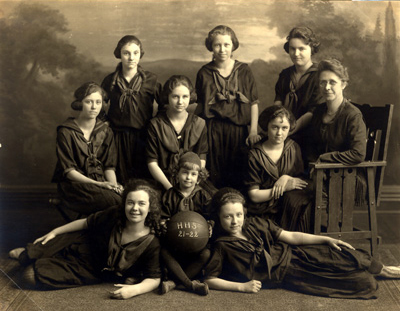
Dorothy was born January 11, 1915 in the small rural town of Hudson, located in northeastern Indiana. She was the youngest of a widely-spaced family of four boys and two girls born to Richard J. and Emma Mosshammer Pfingstag. At the time of her birth, her oldest brother was 19, her youngest brother was 4, and her only sister was 17. This gave Mother some unique freedoms in a large family as well as some unusual responsibilities. In grade school, for example, she had to monitor her behavior constantly because her teacher was also her sister. On the other hand, when she was still very small, she was invited to be the mascot of her oldest brother’s basketball team. It was her job to introduce the team by shooting the ball somewhere near the basket. Later, and on into her eighties, Mom’s skill had improved so that she rarely missed sinking the ball from any angle.
|
|
|
 |
|
|
In her formative years she learned many other skills that she employed throughout her life. From her father and brothers and from school classes, she learned drafting and building skills which she used in order to help build and remodel homes and to design and construct furniture for friends as well as family. When her own brood overwhelmed the capacity of a rented duplex, she designed and helped to finish a large new home in Lorain, Ohio. With the help of a young son, whom she instructed on the job, she poured and finished the cement driveway and, later, the basement of a large addition. In her early eighties she was still amazing co-workers in Habitat for Humanity projects with her woodworking skills and knowledge of the details of framing and building. If she didn’t know how to do something, she would observe professionals or research written works until she understood, then would practice until she was satisfied that her work passed muster.
|
|
|
 |
|
|
|
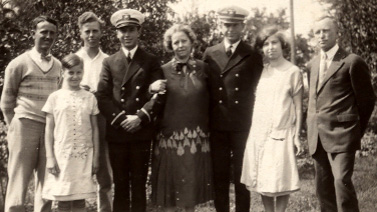
Viv, Dorothy, Paul, Carl, Mom, Herb, Stella, Dad
|
|
|
|
Like many women, Dorothy left a legacy of handmade quilts and other decorative handiwork, but she also built lovely, hand-rubbed Grandfather clocks for each of her children as well as for several other relatives and took the responsibility for cleaning and maintaining them whenever she would visit. She amused friends and acquaintances by carrying a small tool kit in her purse at all times while traveling, ever ready to repair errant automobiles and malfunctioning microphones, balky doors and windows, and the like. She spoiled the men in her family with her barbering skills and continued to wield her hair clippers, comb, and scissors long into retirement by donating this skill on a regular basis to help the indigent in the Missions of Tucson, Arizona.
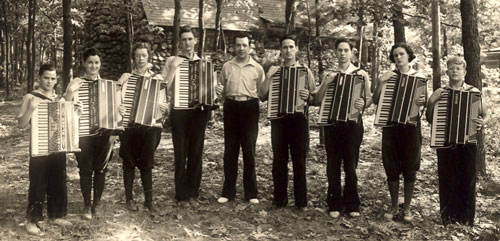
Dorothy was an exceptionally talented musician from an early age. During her public school years in Hudson and Pleasant Lake, Indiana, she was extremely active as a pianist, violinist, and cornetist in various bands and orchestras. In addition, she participated in many vocal groups and was drafted to help conduct the high school orchestra while she was still a student at that level. She was a leader in other ways, serving as class president and high school treasurer. These early experiences prepared her to be absolutely fearless in tackling any project that interested her, and in leading others in music groups, social groups, and educational and charitable endeavors. |
|
|
|
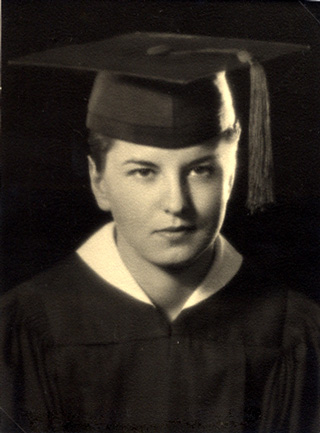
During the aftermath of the Depression, Dorothy’s brothers assisted her financially so that she could attend Los Angeles Jr. College, transferring in 1934 to UCLA. There, she majored in music and minored in physical education, serving as captain of the girl’s archery team. Later, it was she who taught all her children to play baseball and who supported the tumbling and diving experiences that spurred two of her sons to become award-winning gymnasts.
Following graduation from UCLA in 1936, she became Supervisor of Instrumental Music in the Steuben County Schools of Northeast Indiana. In later years, she taught instrumental music in the public schools of Lorain and Sheffield Lake, Ohio. In addition, she directed church choirs, handbell groups, women’s vocal groups, and provided piano accompaniment for myriad instrumental and vocal soloists and chamber groups. She developed a reputation as the woman to call “if you wanted something to get done”.
|
|
|
|
 |
|
|
 |
|
 |
|
|
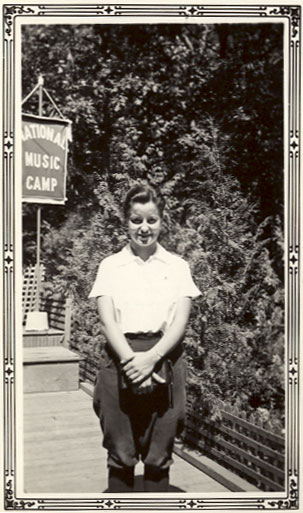
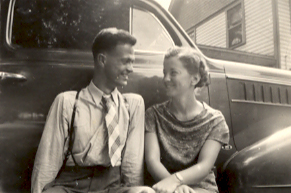
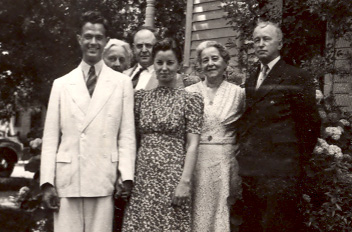
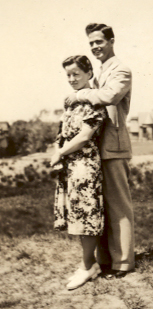
In June 1939, she married another musician, Charles J. Meek of Lorain, Ohio. A graduate of Oberlin College and Conservatory, Charles spotted Dorothy during a drum class at the National Music Camp at Interlochen, Michigan, the summer she worked as a counselor in the girl’s division. Although Dorothy considered herself to be a tomboy and fully intended to remain a “bachelor lady” as she put it, Charles was a very persuasive gentleman and knew a “rare gem” when he saw one. Indeed, she blessed his life and that of her four boys and two girls similarly to the “Wife of Noble Character” described in Proverbs 31. She was forever a woman of purpose and industriousness.
|
|
|
|
 |
|
|
 |
|
 |
|
|
- During the 1940’s she bore six children in the space of eight-and-one-half-years--never did she enjoy a moment's idleness. The way she lived her life is now termed “multi-tasking.” These were the years she became a master of organization
|
|
|
- and delegation and her children learned quickly to assume responsibility for home and one another. Largely through her efforts, all the children learned to play at least one stringed and one wind instrument apiece. Dorothy then proceeded to organize the children into a small orchestra and small ensemble groups and created many opportunities for them to perform--before veterans groups and educational meetings, for example. All the children
|
|
|
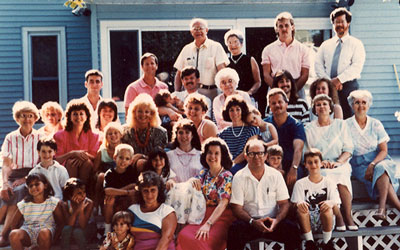
participated in DeMolay or Rainbow organizations in addition to a wide variety of school or community musical and dramatic groups. In November of 1957, Dorothy’s family was pleasantly surprised to receive the award of Lorain (Ohio) “Family of the Year.” In time, her children presented her with twenty grandchildren and five great-grandchildren who brought her great joy.
|
|
|
|
 |
|
|
Despite the time devoted to family, to secretarial and teaching work outside the home, Dorothy supported her husband’s interest in Masonic organizations by participating in the women’s counterpart organizations. In 1945, she became a member of the Order of Eastern Star in Lorain, Ohio. She served as Worthy Matron of the Mt. Lebanon, Pennsylvania chapter in 1976.
|
|
|
 |
|
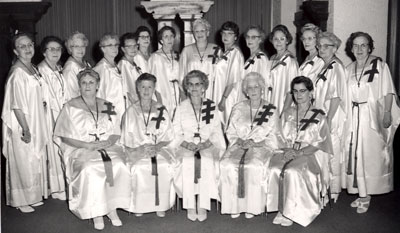
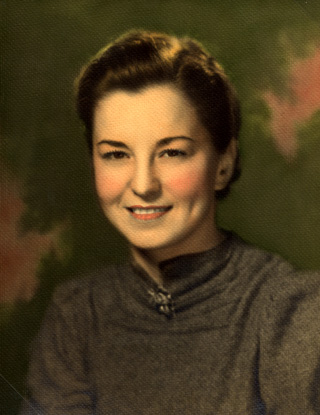
| In 1950, Dorothy became a charter member of the Lorain Assembly #147 of Social Order of the Beauceant, an organization of the wives and widows of the Knights Templar. She served as president of that Assembly in 1953, then became Music Director of the national Supreme Assembly n 1954. Eventually, she started in the line succession that brought her to the highest national office of Supreme Worthy President in 1966/67. Comments we have received from women throughout the nation who served with her or under her skilled mentorship frequently mention how much fun it was to |
|
|
|
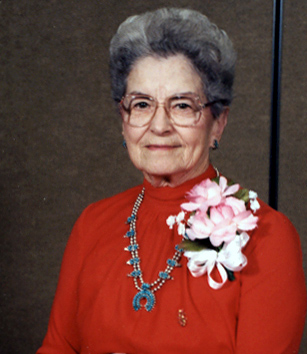
travel around the country with her and how delightful, competent, and organized she always was. Dorothy knew how to create fun for others, to plan meaningful experiences, to feed the body and soul of either the group or the individual. She was a concerned, gracious hostess who loved being part of lively gatherings of people. She enjoyed participating in groups that had tangible, well-defined goals and was proud of the efforts that the Beauceant made to support the Eye Bank that helped make corneal transplant surgery possible. She was a woman of action, ideas, love--always.
|
|
|
 |
|
|
|
 |
|
|
In her retirement years in Green Valley, Arizona, Dorothy and Charles continued to remain highly active in Masonic groups as well as the musical activities they so loved. By her own statement, this proved to be the happiest move of her life. She played violin in a fine chamber orchestra, and baritone horn in the Tucson Beaver |
|
|
Band which toured Europe. She helped Charles establish and develop both a new band and new choral group in Green Valley as well as an active new Arizona chapter of the Sons of the American Revolution. They were especially gratified to be among the small group of founders of the Good Shepherd UCC Church now thriving in the Green Valley area.
|
|
|
| Following the loss of her husband in 1996, Dorothy returned to the East and divided her time between her daughters' homes in Indiana and North Carolina. She sang alto in the Surry chorale in Mt. Airy for as long as her eyes and voice allowed; then, for a semester, she enjoyed taking a drawing class at Surry Community College. Eventually, the ravages of time and mind took from her most avenues of expression, yet her spirit, her will to go on, her indomitable determination continued. She, who was always a “take charge,” strongly independent personality, had to learn great patience and had to employ tremendous ingenuity in making her needs understood. Each new day was an exercise in great fortitude, BRAVERY, and TRUST. During her last year we all rejoiced that, under the splendid care she received in the home in which she was born, the Lord answered prayers that she should find joy again. She began to laugh again, sometimes to cry--all in the right places. And when it was her time to move on, she let her family know she was ready in the only way she could--by the steady, deep gaze of her big brown eyes and the pumping of her only useful hand as if to say thanks for being willing to let her go. As much as she loved life here, she had a deep understanding of and faith in what wonders she would encounter in the hereafter. |
|
|
 |
|
|
|
|
|
|
|
|
|
|
|
|
|
|
|
|
|
|
|
|
|
|
|
|
|
|
|
|
|
|
|
|
|
|
|
|
|
|
|
|
|
|
|
|
|
|
|
|
|
|
|
|
|
|
|
|
|
|
|
|
|
|
|
|